What Is Website Builder: Power for Businesses
- brandedapptestuser
- Feb 9
- 7 min read

Launching a business website can feel overwhelming when coding knowledge is out of reach. Entrepreneurs from Canada to Australia often worry that website builders are too basic or unprofessional for real business success, but modern platforms have shattered these myths. With drag-and-drop design, built-in SEO tools, and responsive templates, you can create a polished site that draws customers and supports growth. This guide clarifies the differences, features, and real value of website builders for eCommerce and service-based businesses.
Table of Contents
Key Takeaways
Point | Details |
Website Builders Empower Entrepreneurs | They provide user-friendly tools that eliminate the need for advanced coding skills, enabling anyone to create a professional online presence. |
Common Misconceptions Debunked | Modern website builders can produce high-quality, SEO-optimized sites suitable for various business needs, contrary to outdated myths. |
Online vs Offline Builders | Online builders offer ease of use and accessibility, while offline builders provide greater customization and control for advanced users. |
Understand Costs and Limitations | Entrepreneurs must be aware of potential costs and limitations associated with website builders to make informed decisions about their online strategies. |
Website Builders Defined and Common Myths
A website builder transforms digital entrepreneurship by offering non-technical professionals an accessible platform to create professional online presences. These powerful tools enable entrepreneurs to design, launch, and manage websites without requiring advanced coding skills or extensive technical knowledge.
Contrary to popular misconceptions, modern website builders have evolved dramatically. Website development involves complex skills beyond simple drag-and-drop interfaces, integrating crucial elements like user experience, search engine optimization, and strategic content design.
Common myths about website builders persist, but the reality is far more nuanced. Here are some key misunderstandings:
Myth: Website builders produce low-quality sites
Reality: Professional templates and advanced design tools create sophisticated websites
Myth: DIY sites cannot rank well in search engines
Reality: With proper SEO optimization, builder-created sites can achieve excellent search rankings
Myth: Website builders are only for small, basic projects
Reality: Modern platforms support complex, feature-rich websites for various business needs
Understanding these tools requires recognizing their versatility. Modern website builders enable attractive, professional sites through intuitive interfaces that democratize web design.
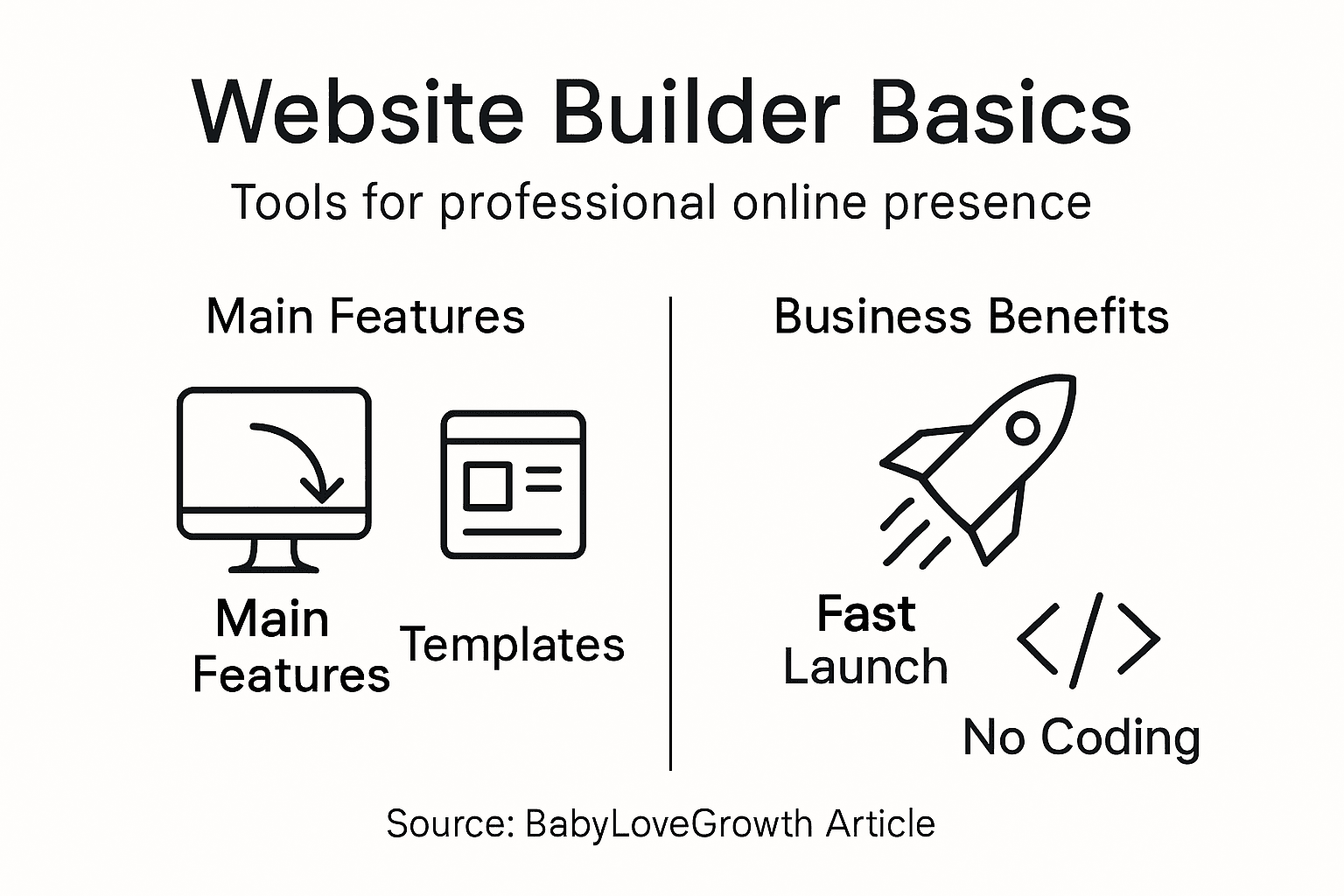
Pro tip: Always choose a website builder that offers responsive design, SEO tools, and scalable features to support your business growth.
Comparing Online and Offline Builders
Website builders come in two primary formats: online and offline solutions, each with distinct advantages for digital entrepreneurs. Understanding the key differences helps businesses select the most appropriate platform for their specific needs and technical capabilities.
Online website builders dominate the market with cloud-based platforms that offer unprecedented convenience and accessibility. These tools typically provide:
Instant hosting and domain integration
Drag-and-drop visual interfaces
Built-in marketing and SEO tools
Automatic updates and security patches
Mobile-responsive design templates
Offline builders, by contrast, provide more granular control and customization options. Developers and advanced users often prefer these platforms because they offer:
Complete source code access
Advanced customization capabilities
Enhanced security through local development
No ongoing subscription requirements
Greater flexibility for complex web applications
The choice between online and offline builders depends on several critical factors, including technical expertise, project complexity, budget, and long-term scalability requirements. Beginners and small businesses typically benefit from online builders’ simplicity, while professional designers might prefer offline tools’ deeper customization potential.
Here’s a concise comparison of online vs offline website builders to help clarify their strengths:
Criteria | Online Builder | Offline Builder |
Accessibility | Cloud-based, anywhere access | Requires local installation |
Customization | Limited to platform tools | Full source code control |
Security | Hosted by provider | Controlled by user locally |
Updates | Automatic platform updates | Manual or self-managed |
Ideal Users | Beginners, small businesses | Advanced users, developers |
Pro tip: Evaluate your technical skills, project requirements, and growth potential before selecting between online and offline website builders to ensure the most suitable platform for your business.
Core Features: Design, AI, and Integrations
Modern website builders have transformed digital entrepreneurship through sophisticated design technologies that democratize online presence creation. AI website builders now provide conversational interfaces that dramatically simplify website development for entrepreneurs at every skill level.

The core features of advanced website builders encompass three critical domains:
Design Features:
Drag-and-drop visual editors
Responsive mobile design templates
Customizable color schemes and typography
Professional layout suggestions
Instant design previews
AI-Powered Capabilities:
Automated content generation
Intelligent layout recommendations
SEO optimization suggestions
Image and graphic creation
Predictive design adjustments
Integration Capabilities:
Payment gateway connections
Marketing tool synchronization
Customer relationship management (CRM) links
Social media platform integrations
Analytics and reporting tools
These integrated features empower businesses to create professional websites quickly, reducing development time and technical barriers. Entrepreneurs can now leverage sophisticated design technologies without extensive coding knowledge, enabling faster digital market entry and more efficient online strategy implementation.
To help entrepreneurs identify important features, here’s a summary of how core builder functions drive business value:
Core Function | Business Benefit | Example Impact |
Design Tools | Enhances site appearance | Attracts & retains visitors |
AI Capabilities | Speeds up development | Creates tailored content |
Integrations | Broadens business scope | Enables online sales, marketing |
Mobile Responsive | Ensures user accessibility | Reaches customers on any device |
Advanced website builders bridge the gap between professional design and user-friendly creation, offering powerful tools for digital entrepreneurs.
Pro tip: Select a website builder that offers comprehensive AI-powered design features and seamless integrations to maximize your online business potential.
Real-World Uses for eCommerce and Services
Website builders have revolutionized how businesses establish and grow their online presence across diverse industries. Website builders support a range of uses from simple informational pages to complex digital storefronts, enabling entrepreneurs to launch professional online platforms quickly.
For eCommerce businesses, website builders offer comprehensive tools to create robust online stores:
Product catalog management
Secure payment gateway integrations
Inventory tracking systems
Shipping and tax calculation features
Mobile-responsive product pages
Customer review and rating systems
Automated sales reporting
Service-based businesses equally benefit from website builder platforms through features like:
Online booking and reservation systems
Client management tools
Service pricing and package displays
Integrated communication channels
Portfolio and testimonial showcases
Professional service descriptions
Appointment scheduling capabilities
Modern website builders empower entrepreneurs across industries—from freelance photographers and consultants to retail stores and digital service providers—to create professional, functional websites that drive business growth and customer engagement.
Website builders democratize online business, providing powerful digital tools for entrepreneurs at every skill level and budget.
Pro tip: Choose a website builder that offers industry-specific features aligned with your business model and growth objectives.
Costs, Limitations, and Common Pitfalls
Website builders offer incredible convenience, but entrepreneurs must understand their inherent constraints. Website builders have notable limitations that can impact long-term digital strategy and business performance.
The primary cost considerations include:
Monthly subscription fees
Transaction charges for online sales
Additional feature costs
Premium template expenses
Advanced integration charges
Common limitations entrepreneurs encounter:
Limited design customization
Restricted advanced functionality
Platform-specific SEO constraints
Potential performance bottlenecks
Challenges with complex e-commerce requirements
Limited data ownership and portability
Potential pitfalls for businesses using website builders involve technical and strategic challenges. While these platforms provide rapid deployment, they often compromise on:
Unique brand representation
Advanced technical configurations
Comprehensive analytics
Deep customization capabilities
Complex integration requirements
Not all website builders are created equal—carefully evaluate platform capabilities against your specific business requirements.
Pro tip: Conduct a thorough feature comparison and plan for potential scaling challenges before committing to a specific website builder platform.
Unlock Your Business Potential with an All-In-One Website Builder Solution
The article highlights common challenges businesses face when choosing a website builder such as limited customization, SEO restrictions, and integration hurdles. It also emphasizes the importance of AI-powered design, responsive templates, and scalable platforms to support growth. If you want to avoid these pitfalls and harness the power of a versatile website builder that adapts to your unique needs, DiyWeb offers the perfect solution. With an intuitive drag-and-drop editor, AI design assistance, and seamless payment integrations, DiyWeb addresses these challenges directly by empowering entrepreneurs and agencies to build professional sites without technical headaches.
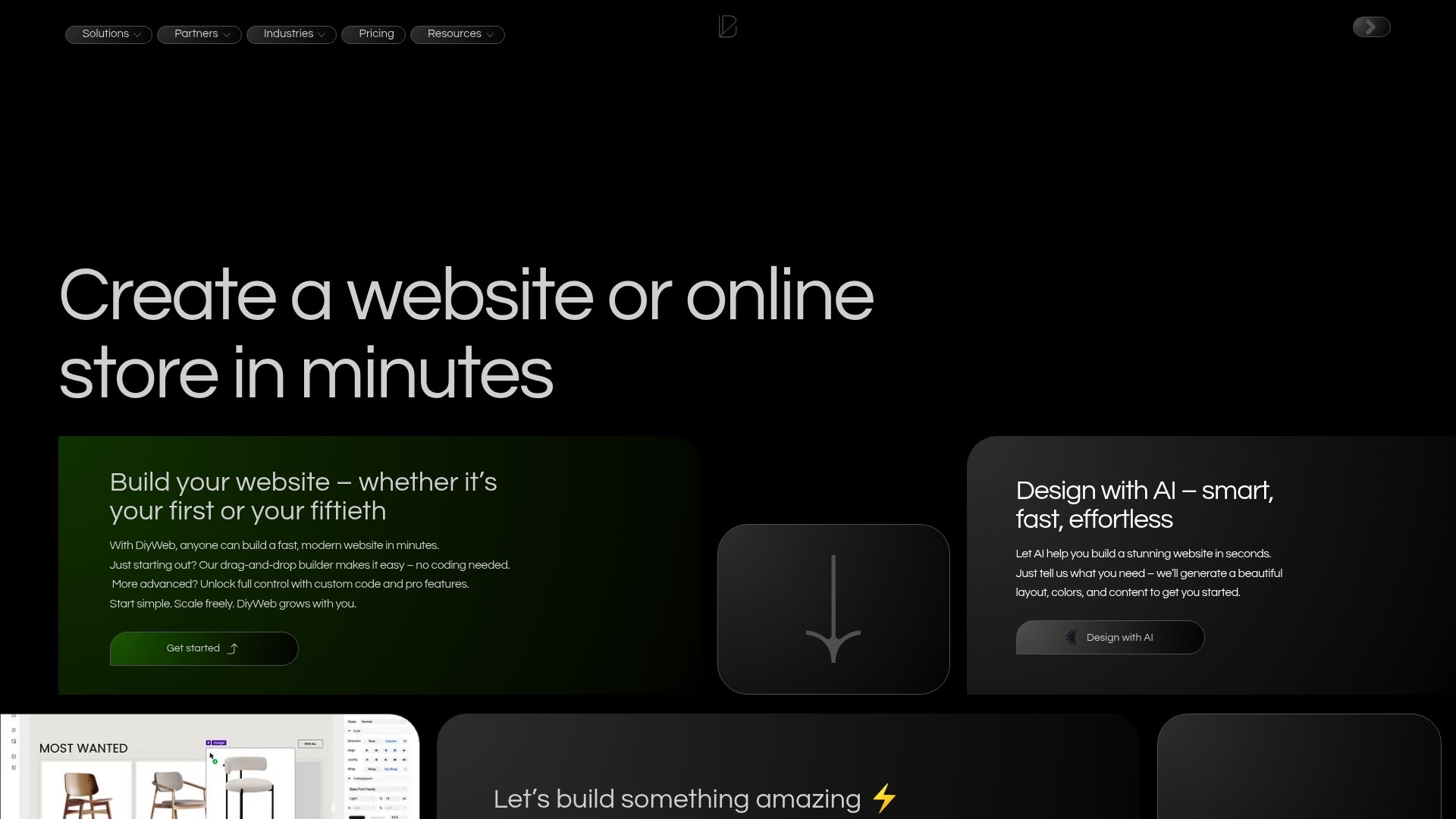
Discover how DiyWeb can transform your online presence today by giving you full control combined with effortless setup. Whether launching an eCommerce store, managing service bookings, or scaling multiple projects, you gain access to advanced features like workflow automation and mobile app editing. Take the first step toward building a website that grows with your business by exploring DiyWeb’s comprehensive platform. Start your journey now and turn your website vision into reality without compromise.
Frequently Asked Questions
What is a website builder?
A website builder is a user-friendly tool that allows individuals and businesses to create professional websites without needing advanced coding or technical skills.
What are the advantages of using online website builders compared to offline builders?
Online website builders offer convenience with cloud-based access, automatic updates, and built-in marketing tools, making them suitable for beginners and small businesses. Offline builders provide more control and customization for advanced users.
Can websites built with website builders rank well in search engines?
Yes, websites created using website builders can achieve excellent search engine rankings with proper SEO optimization, content strategy, and adherence to best practices.
What features should I consider when choosing a website builder?
When selecting a website builder, consider features such as responsive design, SEO tools, customization options, pricing, and available integrations that align with your business needs.
Recommended


Comments